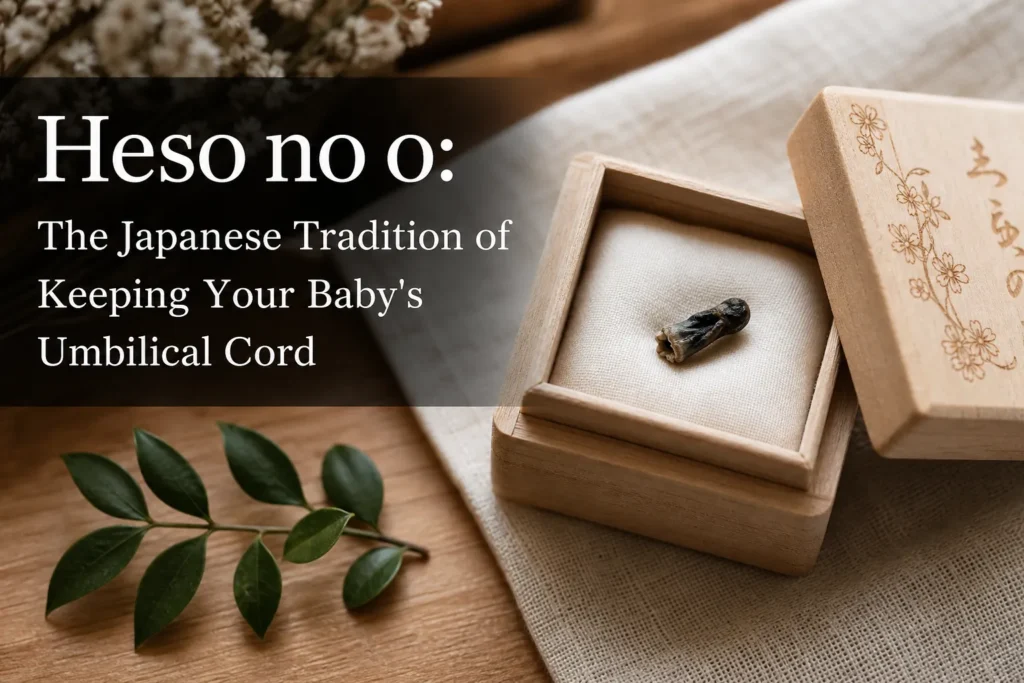
Heso no o: The Japanese Tradition of Keeping Your Baby’s Umbilical Cord
If you’ve ever tucked away a hospital bracelet, first onesie, or lock of baby hair and then wondered what was actually worth keeping, the Japanese tradition of heso no o feels surprisingly clarifying.
In Japan, many families keep a small dried piece of a baby’s umbilical cord in a tiny wooden box. It is a birth keepsake, but not in a cluttered or performative way. It is small, contained, labeled, and deeply specific. For busy parents trying to hold on to what matters without turning memory keeping into another unfinished project, there is a lot to learn from it.
At Tiny Moments Kept, this is exactly the kind of tradition we love: meaningful, simple, easy to store, and easy to revisit. If you want a calmer way to preserve family memories, heso no o is a beautiful place to start.
What is heso no o?
Heso no o (へその緒) literally refers to the baby’s umbilical cord. In practice, the phrase is also used for the custom of keeping a preserved piece of that cord as a memento of birth.
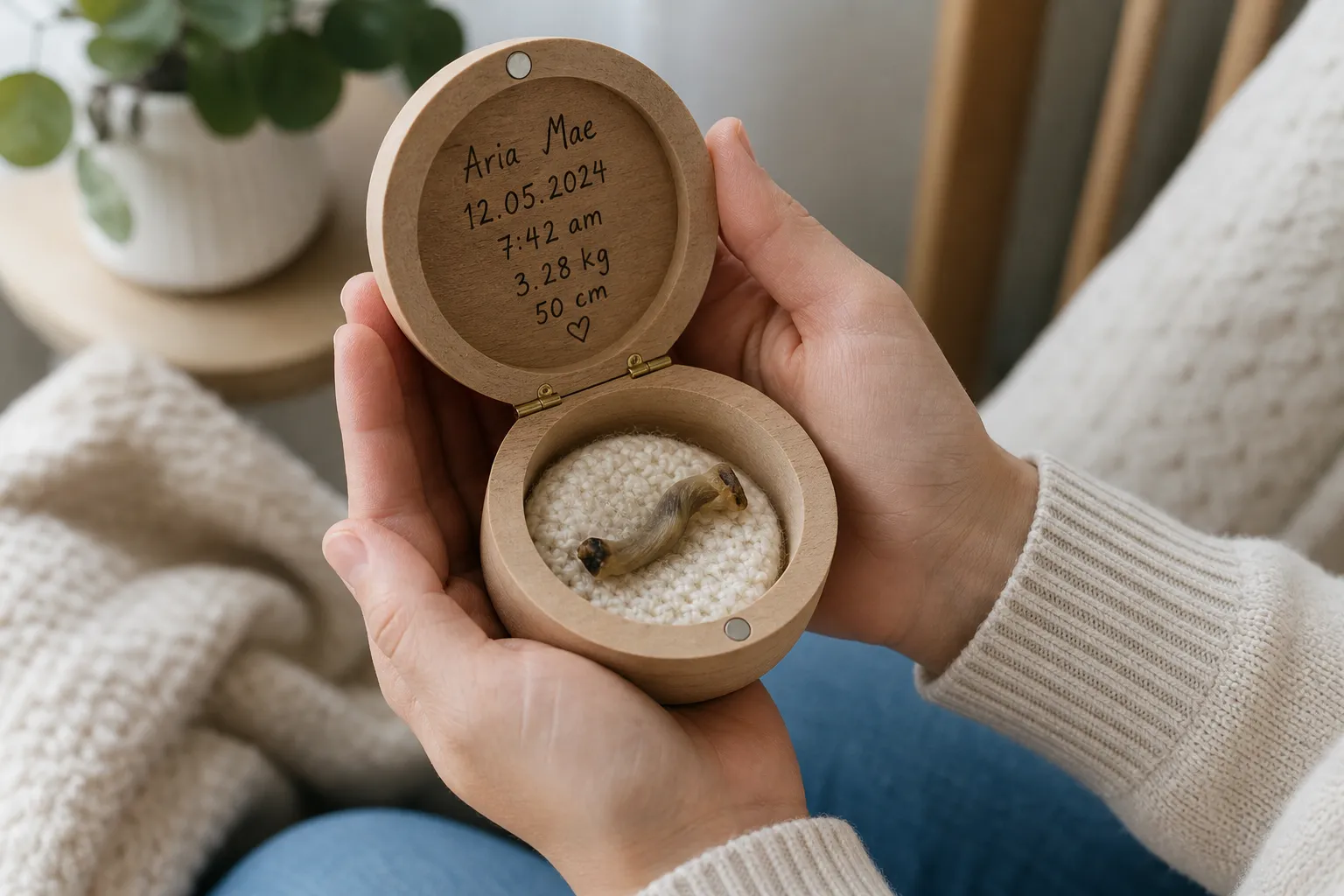
After delivery in Japan, the dried cord stump that naturally separates from the baby may be saved. Hospitals and clinics often place it in a small presentation box, sometimes wrapped in gauze. That box becomes part of the family’s birth keepsakes.
This is not an unusual fringe custom. It is familiar enough in Japan that many parents recognize the box immediately.
“In Japan, it is a traditional practice for parents to keep a portion of their newborn’s umbilical cord, known as ‘heso no o’ (へその緒), as a cherished memento symbolizing the bond between mother and child. Typically, a piece of the umbilical cord is wrapped in gauze and stored in a small wooden box.” – ScienceDirect
For families outside Japan, the closest comparison might be keeping a first curl or hospital ID band. But heso no o is often more formalized. The keepsake usually has its own box, its own label, and a clear place among family mementos.
If you are trying to build a memory system that stays manageable, this is very much in line with a minimalist approach to memory keeping: one small object, one container, one clear meaning.
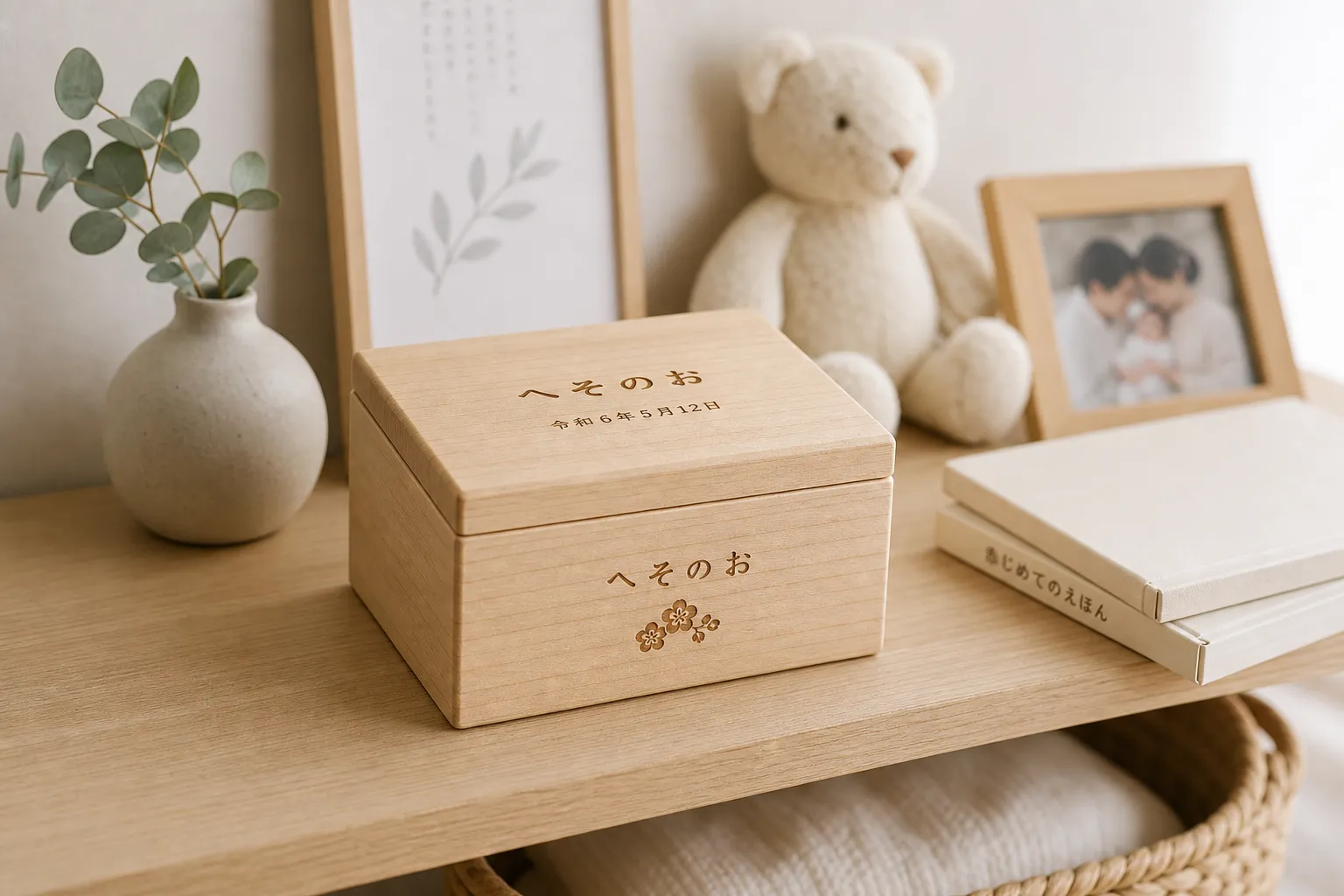
What does a heso no o umbilical cord box look like?
A heso no o umbilical cord box is usually small, light, and made of wood or paulownia-style material. It may be plain or softly decorated, but it is rarely oversized or elaborate.
Common features include:
a hinged or lift-off lid
a white or pale wood finish
space inside for the dried cord, often wrapped in gauze or tissue
printed or handwritten details on the lid or an insert card
Families often write or receive information such as:
Common detail on the box | What it means |
|---|---|
Baby’s name | Identifies whose keepsake it is |
Date of birth | Marks the day the baby was born |
Time of birth | A traditional birth detail many families record |
Weight / length | Adds a practical birth snapshot |
Parent’s name or message | Makes the keepsake more personal |
Some boxes are gifted by the hospital. Others are bought separately at baby shops, maternity stores, online marketplaces, or traditional gift shops in Japan.
What makes the box memorable is not luxury. It is the fact that the keepsake is contained. That matters more than people realize. A precious object that has no clear home often gets lost in the shuffle of parent life. A precious object with a small designated box is much more likely to stay part of the family’s story.
Why Japanese families keep it
The simplest answer is also the most accurate: families keep heso no o because it marks birth and symbolizes the physical connection between mother and baby.
That does not mean every family talks about it the same way. Some see it mainly as a sentimental keepsake. Some connect it with family tradition. Some store it carefully and rarely mention it again until the child is older. Others may show it to their children later in life.
“In Japan, it is a longstanding tradition for mothers to preserve the umbilical cord as a keepsake after childbirth. This practice symbolizes the enduring bond between mother and child.” – University of Tokyo Institute of Medical Science / related cultural documentation
A few practical things are worth saying clearly:
It is not about daily display in every household.
It is not necessarily religious.
It is not something every Japanese family interprets in exactly the same way.
It is often just a normal, recognizable japanese baby keepsake tradition connected to birth.
That last point matters. When people write about Japanese customs, they sometimes over-explain them as mysterious or ancient wisdom. Usually, the reality is more ordinary and more useful: families keep something small because the birth mattered, and the object helps hold that memory.
How heso no o is stored
In many cases, the dried umbilical cord is:
allowed to dry fully
wrapped in gauze, paper, or soft cloth
placed in a dedicated wooden box
stored with other important family records or keepsakes
That box may live in a drawer, a memory chest, a closet with documents, or a display shelf. The key is that it is protected from moisture and unnecessary handling.
A note on safety and practicality
If you are considering saving a dried cord stump yourself outside Japan, keep these basics in mind:
only keep it once it has naturally separated and dried
make sure it is completely dry before sealing it away
avoid plastic if there is any remaining moisture
keep it out of humid bathrooms or damp basements
label it immediately so it is not mistaken for trash later
If you are unsure about anything medical or hygienic, ask your pediatrician or birth care provider. The tradition is simple, but cleanliness and proper drying matter.
What competitors usually miss about this tradition
A lot of content about umbilical cord keepsake customs stops at “Japanese families keep the cord in a box.” That is true, but incomplete. Here are the practical details that are often missed:
1. The power is in the container, not just the object
The box is a big part of why this tradition works. It turns a fragile, unusual item into something organized and protected.
2. It solves a modern parent problem
Most parents are not struggling because their child has no memories. They are struggling because memories pile up without a system. Heso no o is a tiny built-in system.
3. It is a model for selective memory keeping
You do not need to save everything from birth. You need to save a few things that tell the story well. If that idea resonates, you may also like these simple ways to preserve childhood memories.
4. It adapts well across cultures
You do not need to be Japanese to learn from the structure of the tradition: choose one meaningful object, give it a dedicated home, label it, and keep the story attached.
How families outside Japan can adapt heso no o
You do not need to copy the tradition exactly for it to be useful. If keeping an actual cord stump feels right to you, you can do that carefully and respectfully. If it does not, you can still borrow the structure.
Option 1: Keep the actual cord stump
If your baby’s dried cord stump naturally separated and you saved it, you can create your own simple keepsake box with:
a small acid-free box or wooden box
a piece of gauze or tissue
a handwritten label with baby’s name and birth date
one short note about the birth or first days
Option 2: Create a “birth connection box”
If you do not want to keep the cord itself, make a box inspired by heso no o using:
hospital bracelet
newborn cap
birth announcement card
first family photo
note about the meaning of the day
Option 3: Use it as your rule for all keepsakes
This is my favorite option for overwhelmed parents: let heso no o teach you the format.
Use one box per child. Keep only a handful of items. Label everything. If an item has emotional value but no place to live, it probably will not stay meaningful for long.
A simple memory-keeping system inspired by heso no o
Here is a practical version any family can set up in under 20 minutes.
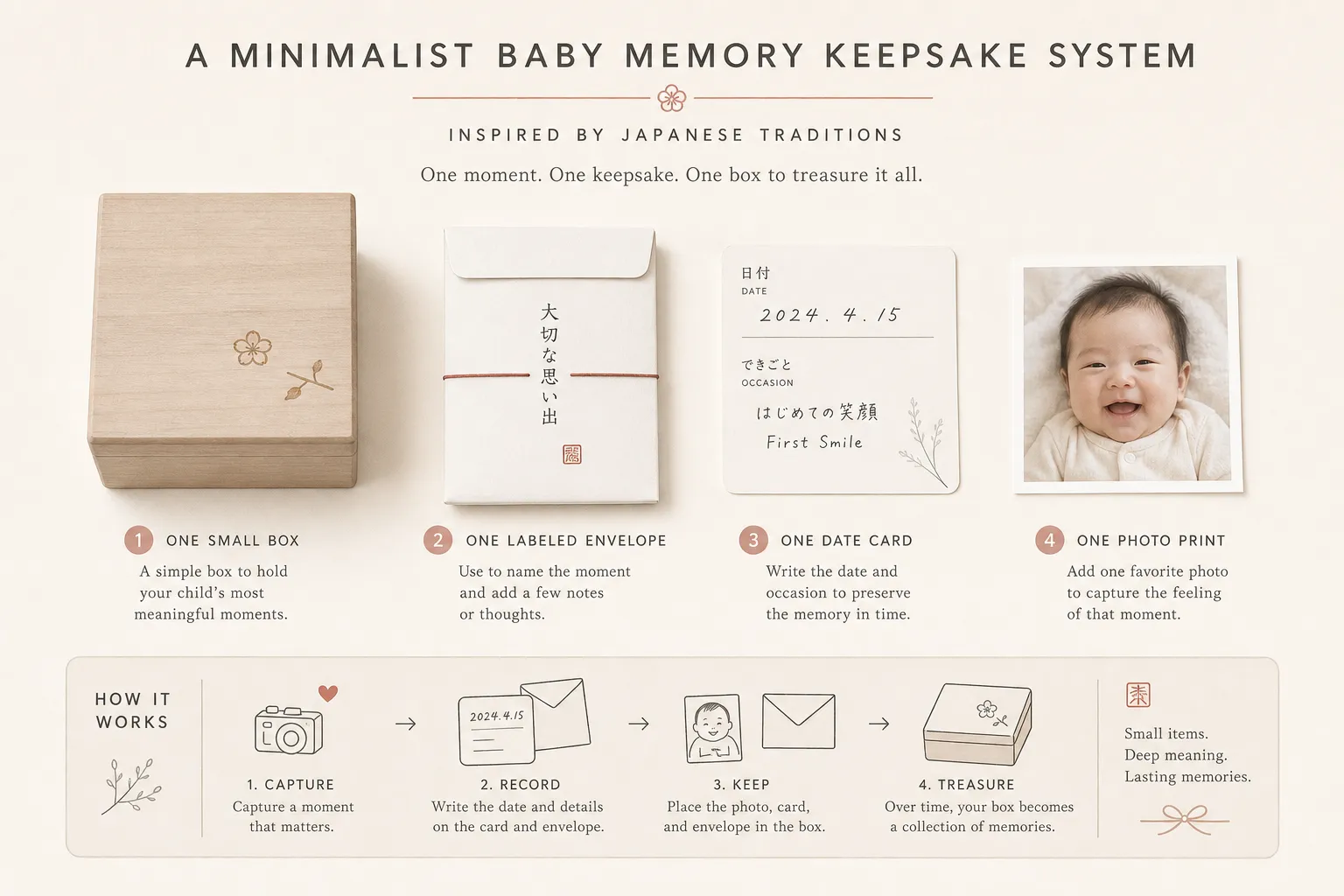
Step 1: Choose one small box
Keep it modest. A shoebox-sized bin is usually plenty for a baby’s first-year physical keepsakes. Smaller is often better.
Step 2: Pick 5 to 10 items max
That limit matters. It helps you keep what is truly meaningful instead of whatever happened to survive in a drawer.
Step 3: Add labels immediately
For each item, include:
what it is
date or age
why you kept it
Step 4: Add one photo and one short story
This is where memory keeping becomes more powerful. The object alone may not explain itself later. The story does.
Step 5: Revisit once a year
A keepsake system only works if you can actually maintain it. Once a year is enough.
This approach fits beautifully with keepsakes that matter most for family memories: fewer items, more meaning, less guilt.
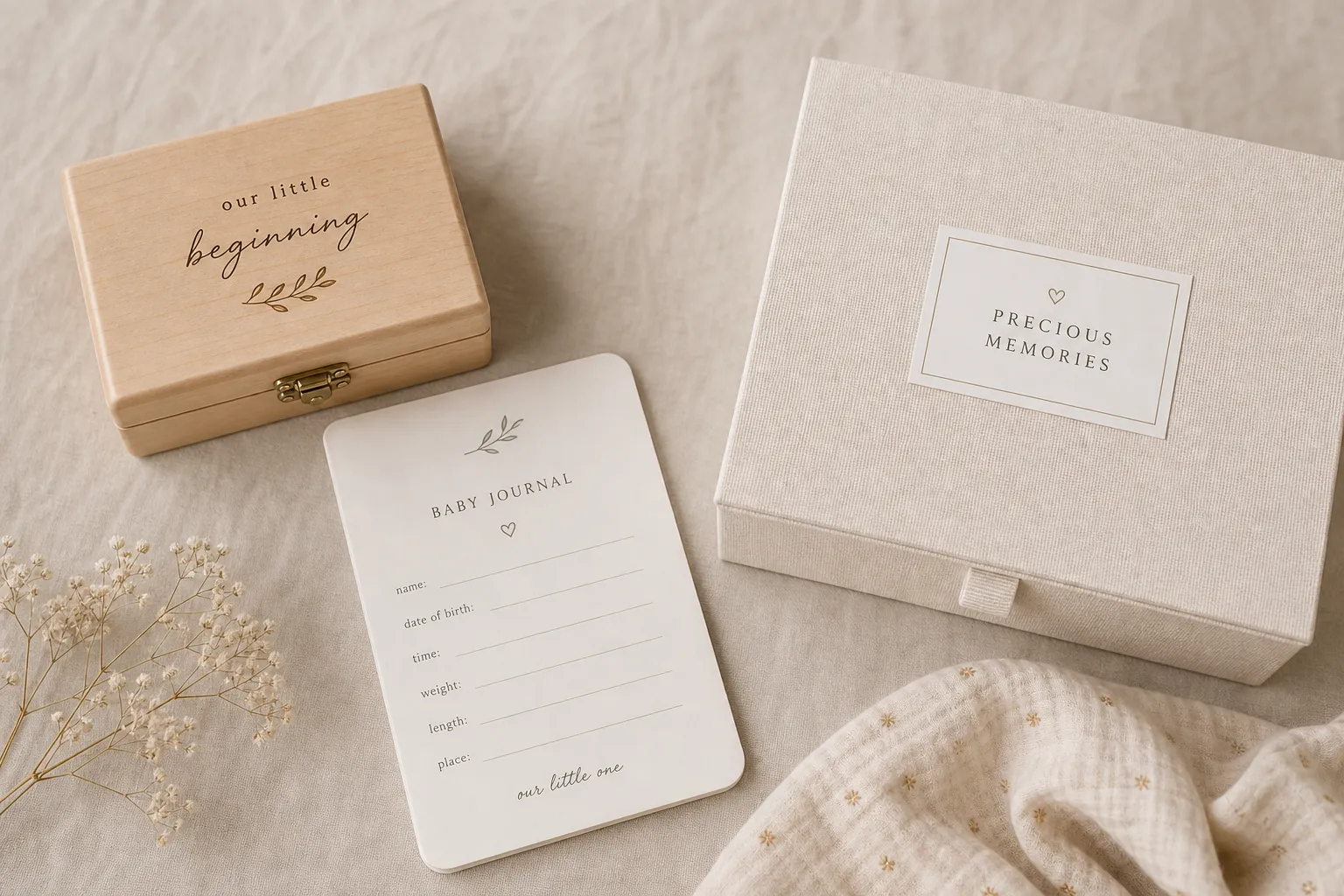
If you want a traditional-looking box
If you want the visual feel of a Japanese heso no o umbilical cord box, look for:
small wooden keepsake boxes
paulownia-style boxes
baby memory boxes with lid labels
custom engraved birth keepsake boxes
You can also create your own label with:
baby’s full name
birth date
birth time
birth weight
place of birth
That little bit of structure makes the keepsake feel intentional instead of random.
When this tradition may not be for you
Not every meaningful memory has to become a physical keepsake.
You may prefer not to keep biological items. You may not have access to the cord stump. You may feel more comfortable with a photo, a written birth story, or a small box of first-day items instead.
That is completely fine. The deeper lesson of heso no o is not “every family should save an umbilical cord.” It is this:
Choose one meaningful marker of birth, store it well, and keep the story attached.
That is enough.
The Tiny Moments Kept takeaway
The best family memory systems are not the most elaborate ones. They are the ones you can actually live with.
Heso no o works because it is:
small
specific
emotionally meaningful
easy to store
easy to revisit
That is exactly the kind of memory keeping we believe in at Tiny Moments Kept. You do not need more bins, more craft supplies, or more pressure. You need a gentle system that helps you keep what matters before it gets buried.
If you want to build that kind of home for your family memories, start small. One child. One box. One story. That is enough to begin, and often enough to last.
FAQ
Why do Japanese keep umbilical cords?
Many families in Japan keep a baby’s dried umbilical cord as a birth keepsake that marks the baby’s arrival and the physical connection between mother and child. It is often stored in a small wooden box called a heso no o box.
What are the traditions when a baby is born in Japan?
Practices vary by family, but one well-known custom is saving the baby’s dried umbilical cord as heso no o. Families may also carefully record birth details and keep small, labeled mementos from the newborn period.
What is the Japanese tradition for pregnancy?
There are several pregnancy and birth customs in Japan, but in the context of this article, the most relevant is what happens after birth: many families preserve the baby’s dried cord as heso no o. The item is usually wrapped and placed in a small wooden keepsake box.